Driving Innovation in Forensic Genomics:
How New STR Technologies Are Enhancing Real-World Workflows
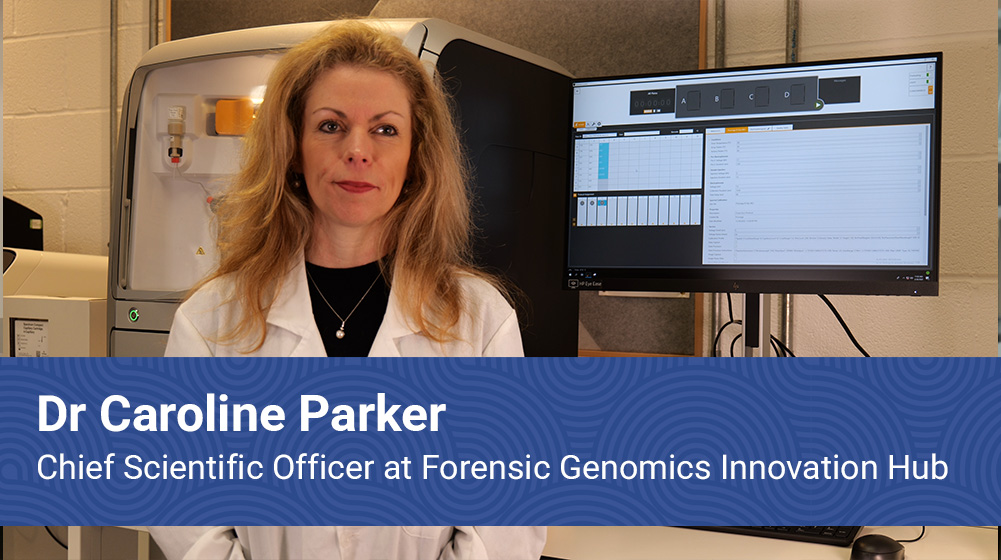
The Forensic Genomics Innovation Hub, based in Southampton, UK, is at the forefront of applying cutting-edge DNA technologies to forensic and healthcare challenges. Led by Chief Scientific Officer Dr Caroline Parker, the Hub is focused on bridging the gap between research innovation and operational application—bringing the latest advancements in forensic genomics into routine practice.
Established in 2020, the Hub has a dual mission: to support the integration of forensic genomics into mainstream criminal justice workflows and to contribute to wider scientific training and research. Its team collaborates closely with academic partners and engages in a variety of projects—from forensic archaeology to cell-free DNA assay development.
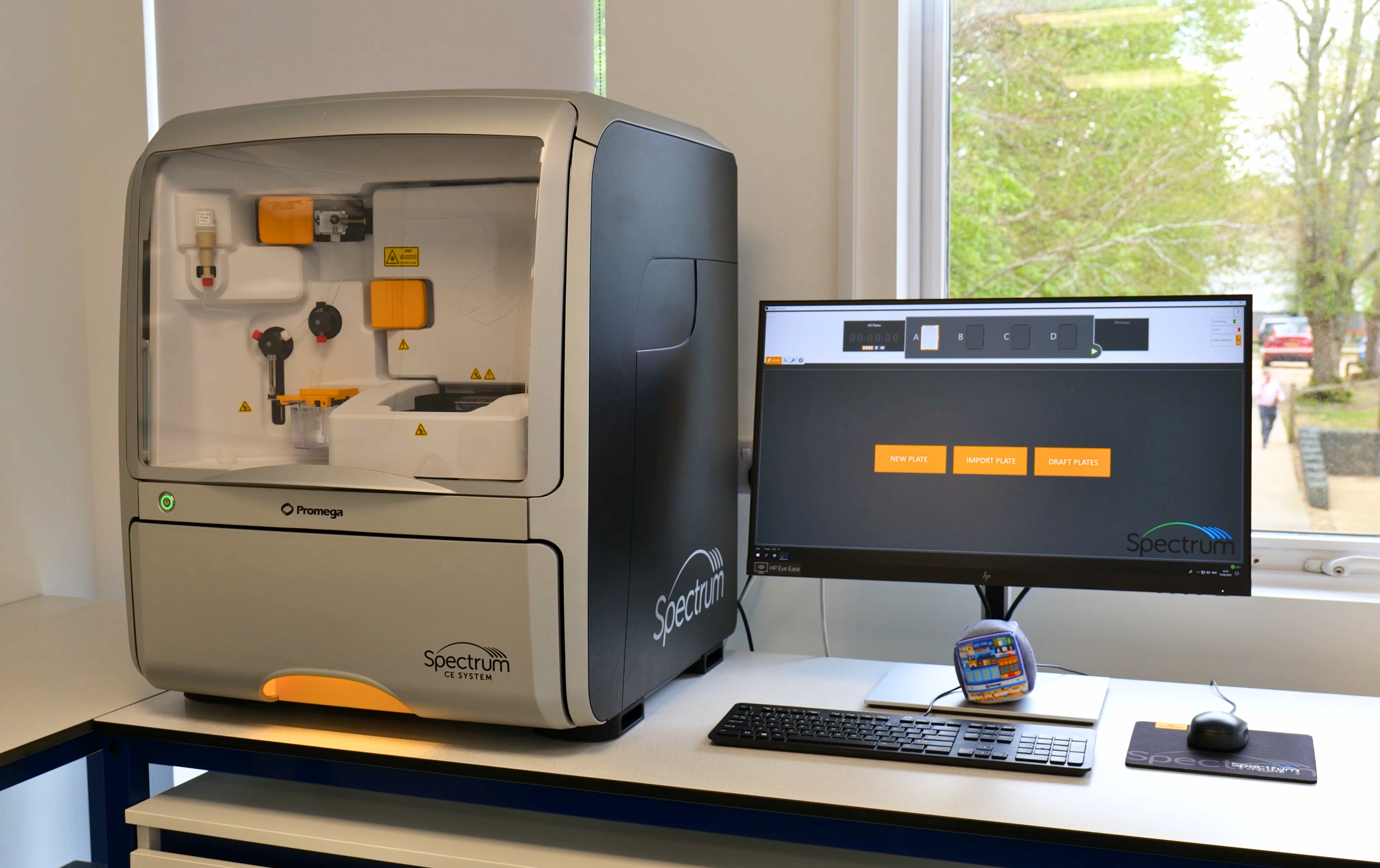
To further enhance its capabilities, the Hub became the first UK lab to install Promega’s Spectrum CE System in late 2023. This next-generation capillary electrophoresis (CE) platform is now central to the team’s work with degraded, low-input, and complex DNA samples. In less than a year, the instrument has already supported over 600 injections using a single capillary—delivering consistent, high-quality results.
Dr Parker describes the instrument as “running beautifully” since the very first injection and highlights its reliability and performance across a wide range of applications. These include validating STR (short tandem repeat) assays for challenging forensic samples, supporting postgraduate training with hands-on access to CE tools, and comparing STR kit outputs to next-generation sequencing (NGS) workflows. In fact, the team has found that in some compromised samples, the latest eight-dye STR chemistries on the Spectrum system deliver equivalent—or even better—results than NGS, with significantly shorter turnaround times.
The lab is also exploring advanced chemistries such as PowerPlex® 27GY, which includes a reduced-stutter enzyme designed to improve mixture interpretation—an ongoing challenge in forensic casework. This adds another layer of utility for both investigative and academic contexts.
One of the key advantages the team has found is the system’s ability to integrate smoothly into real-world workflows. Features such as flexible sample loading, intuitive software, and built-in modules like Relationship Testing allow the lab to shift priorities quickly and adapt to changing project demands. As Dr Parker notes, “The ability to re-prioritise and change the priority of its running is something that's been very useful to us.”
Looking ahead, the Forensic Genomics Innovation Hub plans to expand into larger premises and continue exploring the potential of forensic STR technologies in both justice and healthcare settings.
Watch the video to hear more from Dr Caroline Parker about how her team is using the Spectrum CE System and why STR analysis remains a vital tool in modern forensic genomics.
The lab is also exploring advanced chemistries such as PowerPlex® 27GY, which includes a reduced-stutter enzyme designed to improve mixture interpretation—an ongoing challenge in forensic casework. This adds another layer of utility for both investigative and academic contexts.
One of the key advantages the team has found is the system’s ability to integrate smoothly into real-world workflows. Features such as flexible sample loading, intuitive software, and built-in modules like Relationship Testing allow the lab to shift priorities quickly and adapt to changing project demands. As Dr Parker notes, “The ability to re-prioritise and change the priority of its running is something that's been very useful to us.”
Looking ahead, the Forensic Genomics Innovation Hub plans to expand into larger premises and continue exploring the potential of forensic STR technologies in both justice and healthcare settings.
Watch the video to hear more from Dr Caroline Parker about how her team is using the Spectrum CE System and why STR analysis remains a vital tool in modern forensic genomics.
Learn more about the Spectrum Instruments >
Learn more about FGIH >