Using CellTiter-Glo® Luminescent Cell
Viability Assay to Measure Cell Viability
in High-Throughput Genetic Screens.

Prof. Ben Housden is an associate professor working in the Living Systems Institute at the University of Exeter. His research is focussed on using interdisciplinary methods to study how genetic mutations lead to disease. This involves a combination of new technology development and high-throughput genetic screening to analyse gene function, and to identify and characterise candidate drugs to treat diseases such as cancer and neurodegenerative disorders.
To assess the effectiveness of a candidate drug compound, Prof. Housden and his team measure its ability to alter cell viability in various disease-specific cell models. They have opted to use CellTiter-Glo® assay in all their high-throughput drug screens due to the distinct advantages it offers over other cell viability methods. CellTiter-Glo® is a homogeneous method for determining the number of viable cells in culture based on quantitation of ATP present. The assay is designed with ease-of-use and flexibility in mind, making it ideal for high-throughput applications.
In this short video, Prof. Housden summarises the aims of his research and the approach he and his team have taken in identifying clinically relevant drugs. He highlights the advantages of using CellTiter-Glo® as part of their high-throughput screening workflow, and why they switched from other low-throughput viability methods. He concludes with his latest findings and describes his future research plans.
Learn More About CellTiter-Glo® Luminescent Cell Viability Assay >
View and Download the Video Transcript >
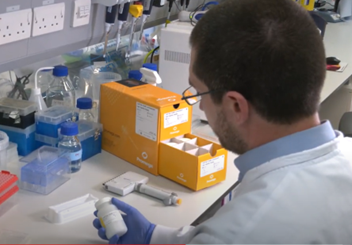
Prof. Ben Housden using CellTiter-Glo® Cell Viability Assay