NanoLuc®-PEST as a Reporter Tool for Compound Screening in Protozoan Parasites

In this short video, Dr Helen Price, Senior Lecturer and Research Group Leader at Keele University, gives an overview of her research into understanding the cell biology of the protozoan parasites Leishmania mexicana and Trypanosoma brucei. Leishmania causes the disease Leishmaniasis, and current drugs have high toxicity and adverse side effects, so the aim of Dr Price’s group is to aid in the discovery and development of new treatments.
One of the projects currently underway in Dr Price’s lab involves screening different compounds to test their activity against Leishmania parasites and check parasite viability. To do this, NanoLuc-PEST is used as a reporter tool. The brightness of NanoLuc luciferase provides a high-intensity signal and the inclusion of a PEST sequence reduces the half-life of the NanoLuc reporter, preventing intracellular accumulation and increasing signal-to-background ratios. These properties help to make Dr Price’s NanoLuc-PEST expressing Leishmania mexicana cell line a highly sensitive and dynamic system for drug discovery.
See more about Dr Price’s research >
Learn more about Luciferase Assays >
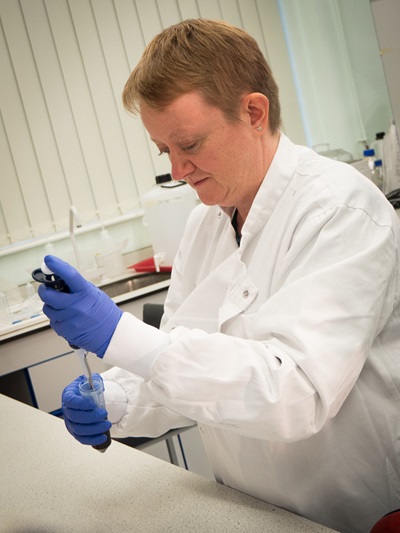
Dr Price’s research focuses on Kinetoplastid Parasites.
You can also view this video on YouTube