How the Small Size of the Bioluminescent Peptide Tag,
HiBiT, Makes it an Ideal Reporter
for Virology Research
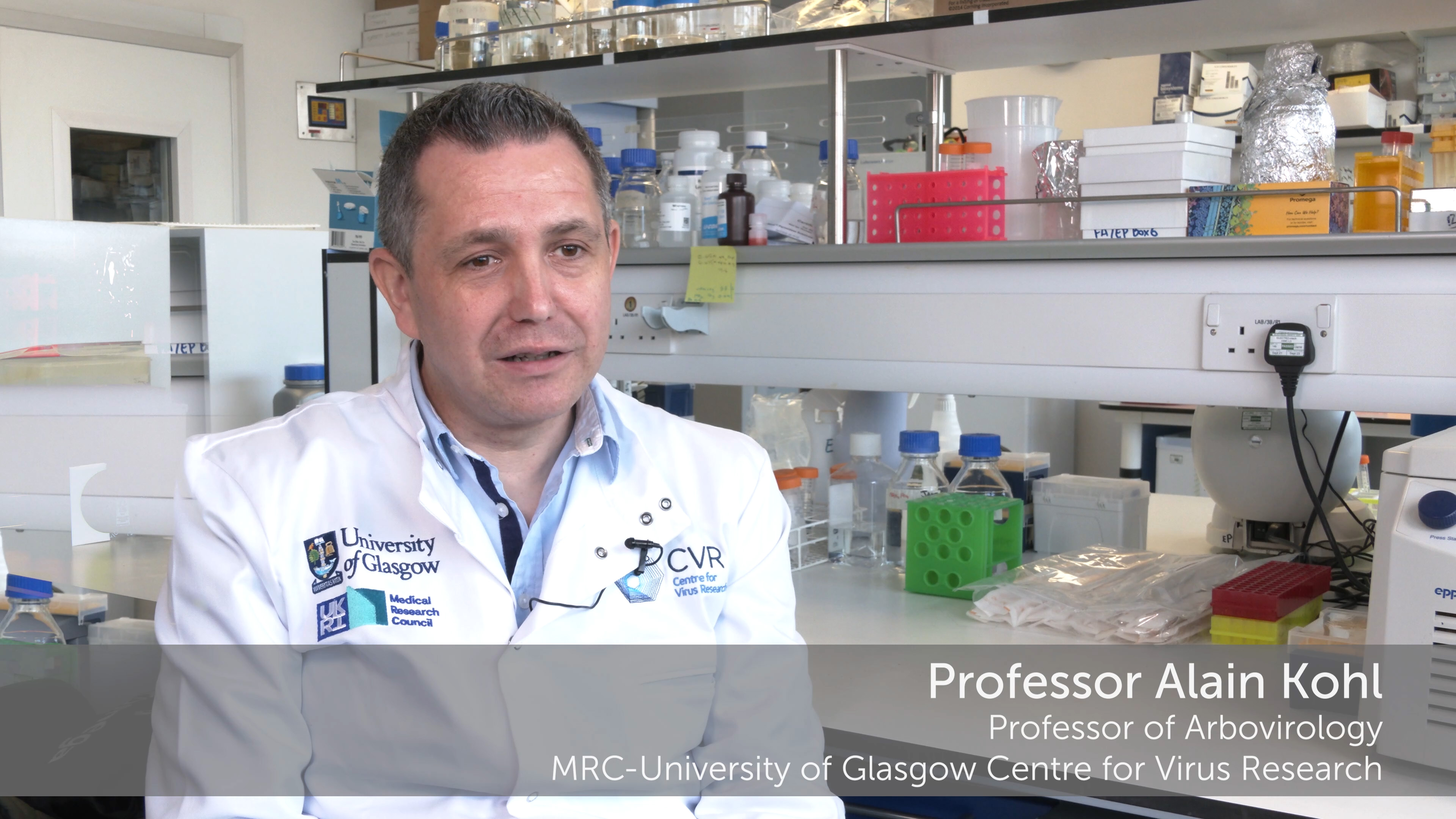
Alain Kohl is a Professor of Virology at Liverpool School of Tropical Medicine (LSTM). Arboviruses are a group of viruses that are transmitted to humans and other vertebrates by arthropod vectors such as mosquitoes, midges or ticks. Dengue virus, Zika virus and chikungunya virus are particularly prominent human pathogens. Professor Kohl is particularly interested in how such arboviruses interact with vectors, and a number of tools have been developed in his laboratory to manipulate these viruses, to better understand this process.
Dr Akira Alexander is a postdoctoral researcher in the Kohl group. He is investigating how Toscana virus replicates in sand fly cells. For this project, he is using the HiBiT Protein Tagging System to monitor the expression of a specific viral protein.
HiBiT is a small, 11-amino acid peptide tag that produces a bright, quantitative bioluminescent signal through high-affinity complementation with a larger subunit called LgBiT, in the presence of substrate. This bright signal provides enough sensitivity to detect endogenous expression.
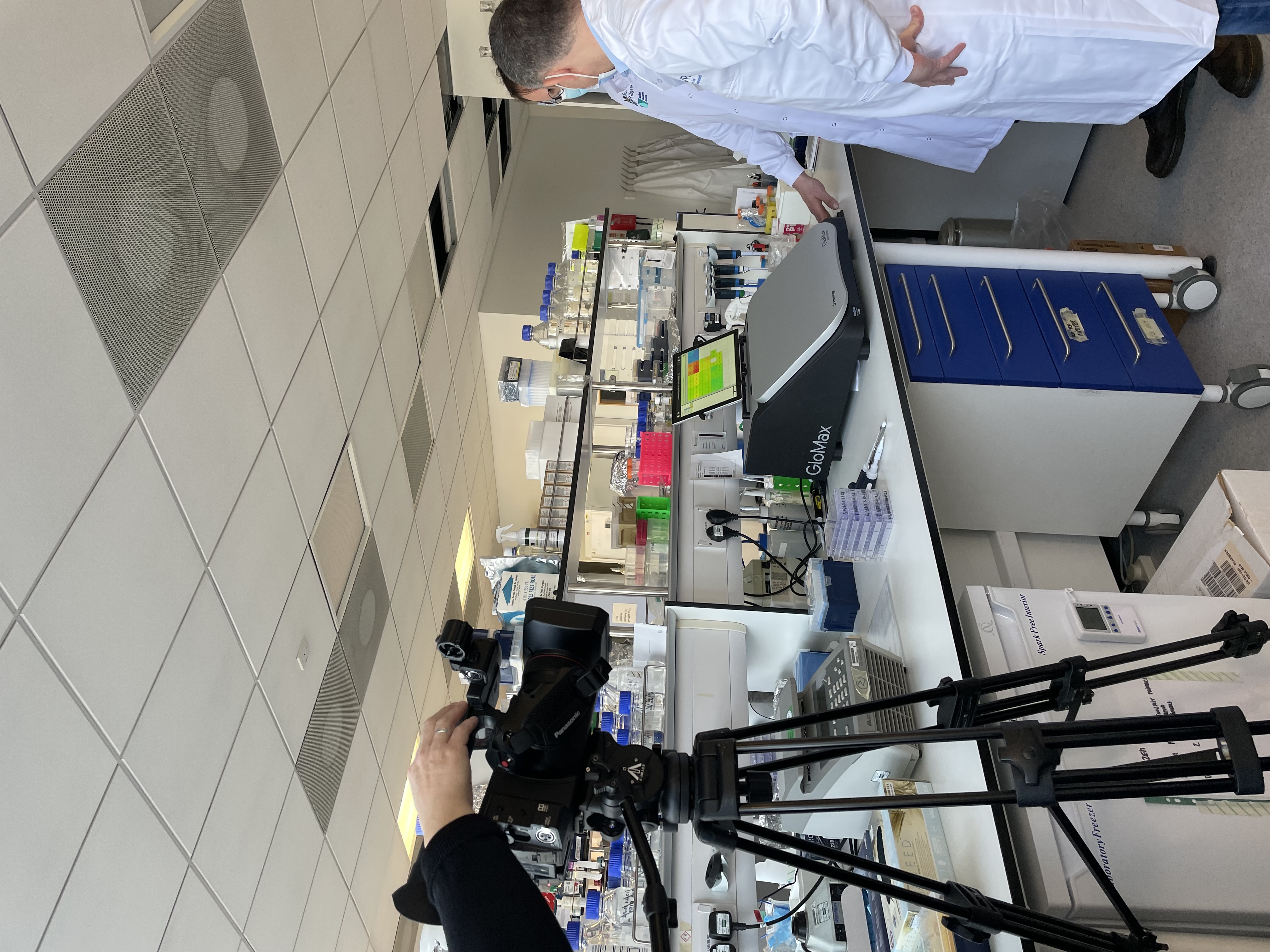
In this video, Professor Kohl and Dr Alexander explain how the small size of the HiBiT tag makes it an ideal reporter for virology research. Because of its small size, HiBiT can be inserted into a viral genome without dramatically increasing the length of that genome or needing to replace a viral protein with the reporter tag. This avoids potential deleterious effects such as virus attenuation or inhibition of virus replication. Dr Alexander describes how he uses the HiBiT System in endpoint experiments, and how its real-time capability is also a benefit over antibody-based tags. He also discusses the advantages of using the GloMax® Navigator plate reader with the many reporter assays he runs.
Learn more about HiBiT tagging >
Find out more about the Centre for Virus Research >
See the range of GloMax® plate readers >
Download the PDF of the case study here >
View and download the video trancript >
You can also view this video on YouTube